Vyberte svou polohu
Pro co nejlepší zkušenost s těmito webovými stránkami prosím zvolte polohu a jazyk
Pro co nejlepší zkušenost s těmito webovými stránkami prosím zvolte polohu a jazyk

2020 will go down in history as one of the most game-changing years in modern manufacturing. The COVID-19 pandemic upended not only our personal lives, but every aspect of global and local economies. As 2020 comes to a close, it’s time to look forward to 2021. Let’s take a look at five major manufacturing trends that, while undeniably accelerated by the events of 2020, and will hold true for labeling trends in 2021 and beyond.
Cloud-hosted technologies are no longer new and shiny. Cloud-hosting is now an expected part of a solution discussion: “Will this be hosted locally or in the cloud?” Thanks to maturing technology and improved security (surpassing local security standards), over 90% of enterprises already use a cloud service, according to Flexera’s 2020 State of the Cloud Report.
How labeling software will support the adoption of cloud technologies in 2021:
Smart manufacturing refers to the ways in which businesses are harnessing the power of data within their facilities to optimize every aspect of the production process. Gartner estimated that, by the end of 2020, there would be 5.8 billion enterprise and automotive Internet of Things (IoT) endpoints in use. At the core of IoT is data, and barcodes and RFID are some of the most ubiquitous data carriers.
Here are three ways labeling software will enable smarter device communication in 2021:
Industry has always strived to produce greater value out of fewer resources, but 2020 brought new meaning to the goal of doing more with less. When large segments of the workforce were suddenly unable to work in-person, businesses pivoted to continue achieving their goals with fewer staff on site. Necessity may have triggered the need to remove manual touchpoints from processes, but the trend of reducing human interaction within manufacturing is here to stay.
Implement these lean labeling trends in your labeling environment in 2021:
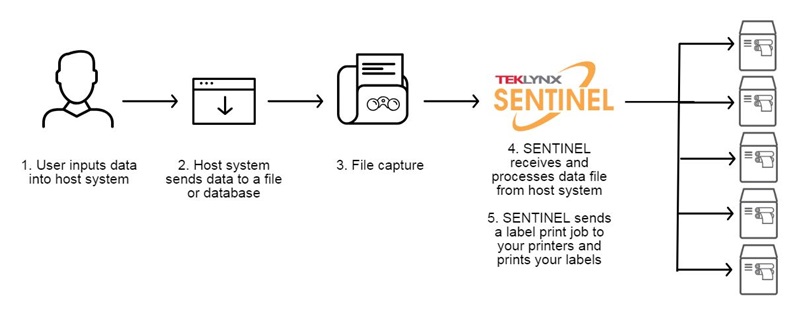
Perhaps the hardest learned lesson of 2020 was that systems weren’t always up to the task of pivoting to meet the latest challenge. Food manufacturers suddenly had to shift from selling to restaurants and institutions to selling directly to consumers. This introduced the challenge of quickly getting the required nutrition facts and ingredients labels onto products that had previously not needed them. Although the FDA relaxed some labeling requirements, food manufacturers were still responsible for informing the consumers of critical information such as allergens.
Throughout 2020 and into 2021, businesses will place a stronger focus on resilient supply chains powered by adaptable software solutions. Here are a few ways your labeling software can help.
With more data at our fingertips than ever before, it’s no surprise that consumers want to know more about the products they buy. Transparency about products is important to consumers: 70% of consumers are most interested in the social, health, environmental, and safety impacts of the product they buy (compared to the same impacts of the company that makes them), according to a report by the Consumer Goods Forum. Furthermore, transparency could save your business in the face of a crisis. 85% of consumers are more likely to stick with a business during a brand crisis if it has a history of being transparent, according to Sprout Social.
Transparency starts with the label, which must contain accurate and detailed information about the product. Labeling software has promoted transparency within the supply chain for decades, but in 2021, specialty 2D barcodes will pave the way for deeper consumer research.
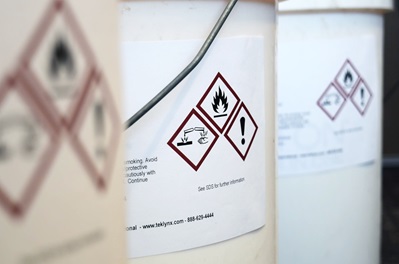 Labeling regulations have been around for decades and vary by industry. Required by the government and enforced by the threat of fines, labeling regulation compliance is a key goal for companies in industries including food, chemical, medical device, pharmaceutical, and more. Requirements like GHS labeling for chemicals and UDI labeling for medical devices ensure that workers, patients, and consumers are informed of hazards and safety instructions. In the food industry, consumers use nutrition facts labels to make healthy choices, and allergen labels keep adults and children with allergies safe. More recently, the alcoholic beverage industry is beginning to self-regulate with the introduction of the Brewers’ Voluntary Disclosure Initiative. The emerging cannabis industry has been born into a world where transparency is a priority and clear and accurate labels are the means to that end. Labeling regulations are here to stay and remain a top priority for manufacturers in 2021.
Set your company up for success in 2021 and beyond by ensuring your labeling software is ready to support whatever 2021 throws your way! Want to talk to a TEKLYNX labeling software expert?
Doug Niemeyer is the President & General Manager at TEKLYNX Americas. He leverages his 25+ years of sales & marketing experience in technology and leadership to help grow the business. His passion for leadership, insatiable curiosity, and competitive spirit help to drive success, encourage progress and development while ensuring teams hold positive customer experiences in the highest regard, all with the purpose of helping companies barcode better. When he is not working you can find him in a gym, on a field or golf course playing or coaching.
With what’s happening in the world right now regarding COVID-19, you’re probably trying to do more with less in your manufacturing facility. In the current state that manufacturing is in – lower operational headcount and unpredictable production volume – eliminating manual steps is a necessity.
A common labeling challenge I’ve been hearing recently is the need to move toward a paperless label approval process. Instead of printing out sample labels, physically delivering them to each person in the approval process, and returning to the label design software to implement changes, companies are looking to digitally transform this process and make label approval paperless.
READ MORE
Inefficient label printing leads to wasted materials, lost time, higher costs, and added environmental impact. In this blog, we’ll discuss how to eliminate waste in label printing by showing you five basic steps to optimize your labeling environment with lean labeling practices.
© Copyright 2026 TEKLYNX CORPORATION SAS. Všechna práva vyhrazena.
What do you think? Leave us a comment.
Comments will be reviewed and are subject to TEKLYNX’ comment policy. Your email address will not be published publicly.